What is Tuneable White Lighting?
Tuneable white lighting refers to LED luminaires that contain two or more LED arrays of different colour temperatures — typically warm white (2700-3000K) and cool white (5000-6500K). By varying the output ratio between these arrays, the luminaire can produce any colour temperature within its range, allowing the quality of light to change dynamically throughout the day or on demand.
Unlike fixed colour temperature luminaires that deliver the same light quality at all times, tuneable white systems can replicate the natural progression of daylight — from warm morning tones through bright midday illumination to relaxing evening warmth — supporting the body's natural circadian cycle.
How Does Tuneable White Work?
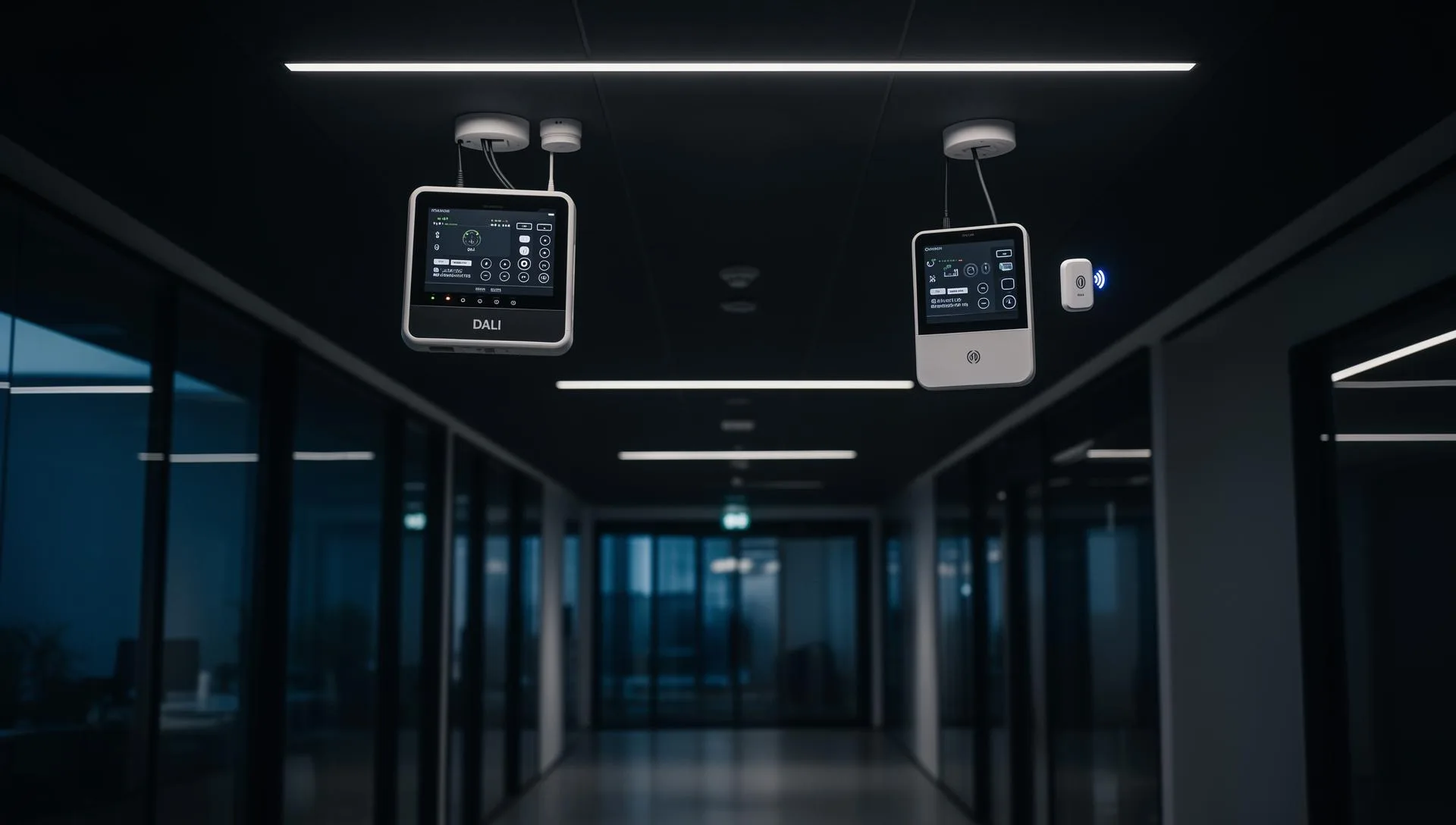
Tuneable white luminaires use multi-channel LED drivers that independently control the warm and cool LED arrays. The control signal — typically DALI DT8 (Device Type 8) or wireless Bluetooth Mesh — specifies the target colour temperature and intensity. The driver then adjusts the current to each LED array to achieve the desired output.
Advanced systems use pre-programmed circadian schedules that automatically adjust colour temperature throughout the day without manual intervention. These schedules can be customised to match the building's operational hours, geographic location and specific user requirements.
Benefits of Tuneable White
• Circadian support — cooler, higher-intensity light in the morning promotes alertness; warmer, lower-intensity light in the evening supports melatonin production and sleep preparation • Improved concentration — studies show that cooler colour temperatures (4000-5000K) improve cognitive performance and focus in office and education environments • Patient recovery — healthcare research demonstrates that circadian-aligned lighting can reduce patient recovery times by up to 15% and improve sleep quality in hospital wards • Visual comfort — warmer tones reduce perceived harshness in lounge, breakout and hospitality areas • Reduced eye strain — dynamic adjustment reduces the fatigue associated with working under fixed, overly cool lighting for extended periods
Applications for Tuneable White
• Healthcare — ward lighting that follows a 24-hour circadian schedule to support patient recovery and reduce staff fatigue on night shifts • Offices — conference rooms and open-plan areas where colour temperature adapts to meeting types or time of day • Education — classroom lighting that energises students in the morning and calms in the afternoon • Care homes and assisted living — circadian lighting to support elderly residents with disrupted sleep patterns, particularly those with dementia • Hospitality — hotel rooms where guests can personalise light colour from warm relaxation to bright task lighting
Control Options for Tuneable White
Tuneable white luminaires require multi-channel control capabilities. EOS supports:
• DALI DT8 — the industry standard for tuneable white control over wired DALI-2 infrastructure • Wireless Plexus — Bluetooth Mesh control enabling tuneable white in retrofit projects without dedicated control wiring • Pre-programmed schedules — autonomous circadian profiles stored in the driver, requiring no external controller
All EOS tuneable white products ship with configurable colour temperature ranges and are compatible with our wired DALI and wireless Plexus control ecosystems.
More Guides
What is DALI Lighting?
DALI (Digital Addressable Lighting Interface) is the global industry standard fo…
Wireless Lighting Controls & EOS Plexus™
Wireless lighting controls eliminate the need for dedicated control wiring, maki…
TM66 Circular Economy Lighting
TM66 is the CIBSE Technical Memorandum that provides a standardised method for a…
Lux Levels Guide
Lux is the standard unit of illuminance — the amount of light falling on a surfa…
IP Ratings Explained
IP (Ingress Protection) ratings classify the degree of protection a luminaire pr…
How to Light an Office
Never has the need for great office lighting been more imperative. This guide co…